Your AI Doesn't Need More Tools. It Needs Better Context.
AI tools can reach more of your data than ever and still miss the point. What they lack is context, like which project matters and which document is current.
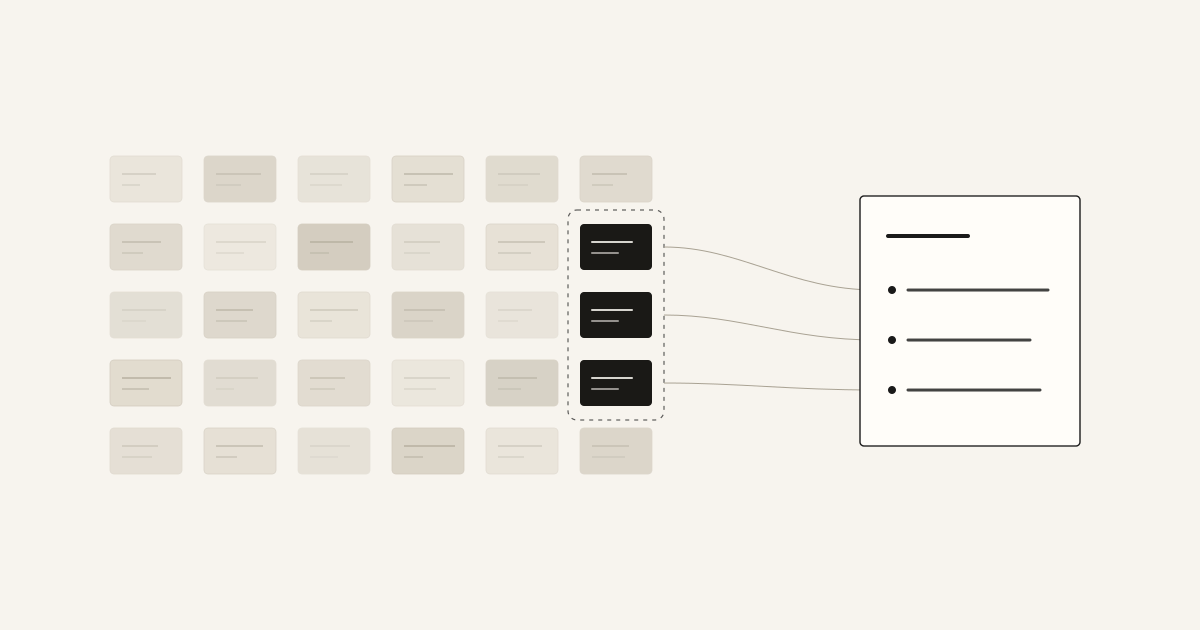
Most LLMs and AI tools can now connect to your data. Email, Slack, Drive, Notion, your calendar, your CRM. Some reach a few hundred sources.
That part is useful. An AI that can’t see your calendar can’t move a meeting, and one that can’t read your documents can’t answer questions about them.
What most of them still lack is context. They can reach your data, but they don’t understand the situation around it. They don’t know which project matters, which document is current, or what you mean when you ask for something.
I’ve run into this over and over while building automations. The model had access to everything it needed and still produced mediocre output. Then I rewrote the instructions, gave it better source material, or told it where the workflow stood, and the same model did much better work. Its access hadn’t changed at all.
A tool gives an AI a capability. Context tells it when to use it. We’ve mostly solved the first problem and barely started on the second.
Access isn’t understanding
Picture a new hire on day one. You give them Slack, email, Drive, Jira, the CRM and every document they’re cleared to see, then tell them they have access to everything. Nobody would call that person onboarded.
They don’t know which projects matter or which deadlines are already dead. They don’t know who actually makes decisions, which Slack threads are real requests, or that the spreadsheet everyone links to stopped being the source of truth months ago. Above all, they don’t know what you mean when you say “take care of this.”
A colleague who has worked with you for two years does. You say “can you take a look at this?” and they know what “this” is and that it’s due tomorrow. None of that is in the document you handed them. It comes from two years of working together.
We give AI agents the access badge, skip the onboarding, and then wonder why they don’t act like the two-year colleague.
More tools can make the result worse
Imagine two agents, both asked to “prepare me for tomorrow’s meeting with the product team.”
The first has Gmail, Slack, Drive, Calendar, Notion, a CRM, a browser and web search. It finds 47 documents, summarizes 12 Slack threads and hands you a five-page briefing. It’s impressive, and mostly useless.
The second only has email, the calendar and a few project docs. But it knows your role, which projects you own, what’s already been decided, what you’re blocked on and what your manager cares about. It gives you one page with the three things you need to know walking in.
I’d take the second one every time, even though it can do far less.
I think of usefulness as roughly capability multiplied by context. Because it’s multiplication, near-zero context wipes out almost any amount of capability.
Extra tools also make every decision harder. Before an agent picks a system, it has to work out the goal and whether anything needs doing at all. Each new integration adds options to that choice without adding any judgment about it.
What context looks like in practice
The second agent won because it knew the person and the task. Two other kinds of context matter just as much, and they’re where agents tend to go wrong.
The first is organizational knowledge that has gone stale without anyone saying so. A document says Project X launches in October. Everyone on the team knows that date was set six months ago and has since slipped. The document is still in the system, and nothing in it says it’s wrong. An agent acting on stale information can do more damage than one with fewer tools.
The second is negative context, which people forget to give. Some of the most useful things you can tell an AI are what not to do. “Don’t send anything externally without asking me.” “Don’t use that source, it isn’t authoritative.” “Don’t touch the public site until the regional team signs off.” None of these are tools. They’re limits on how the tools get used.
Page metadata is where I see this most in my own work. Ask a model to write a title, description and summary for a page and you’ll get something fine. Now tell it the page is a product page for technical buyers in Germany. Give it the approved terminology, a few existing pages, the positioning and a rule against unsupported claims. The output gets much better. The model didn’t learn to write overnight. You changed what it knew about the job. Research briefs work the same way once you name the markets, the sources and what counts as a verified claim.
Why context is harder than tools
A tool has a spec. It has an API schema, defined inputs and a clear owner. You build it once and it mostly keeps working.
Context has none of that. There’s no schema for “the October date slipped.” Nobody owns keeping it accurate. It’s scattered across threads, docs, tickets and sometimes one person’s head, and it goes a little more stale every week whether anyone notices or not.
That’s why the industry keeps building tools. They’re the half of the problem you can finish. You can ship an integration. You can’t ship an understanding of someone’s company.
Won’t better models fix this?
The obvious objection is that models and retrieval keep improving, so agents will eventually work out the context from access alone.
Retrieval finds documents. It can’t tell which of two conflicting documents is current, and it can’t find a decision that happened in a meeting and never got written down. Giving an agent every email, message and file makes this worse, because more material means more noise to sort through.
I’d design around a different question. What’s the least context this system needs to make a good call? A good assistant shouldn’t know everything about you. It should know the right things when they matter.
That also changes what memory is for. Remembering that I like short answers is nice. The memory that matters is about the work. What got decided, what’s still open, what we tried and dropped, and why.
Here’s the test I use. If I come back to a project after three months, can the agent tell me where it stands before I explain anything?
Context is the new interface
Tool demos are easy to love. Send an email. Create a ticket. Update the CRM.
Here’s the situation I’d actually want an agent to handle. A customer raises an issue tied to a project that’s already behind. The customer expects an update tomorrow. Engineering hasn’t confirmed the fix, and the account manager doesn’t want to commit to a date before they do. The right move is to hold the customer email and ask engineering for a timeline first.
The tools in that story are trivial. The hard part is reading the situation, which people do all day without noticing.
Software has always been built around actions. Click this, open that, run the report. Once the AI is the one picking the action, the interface has to tell it what’s going on and what it’s allowed to do. My bet is that the products that win will be the ones that best understand the situation around their integrations, however many they have.
Tools give an AI hands. Context tells those hands what to pick up and what to leave alone. Right now we’re mostly building hands.