Index Yourself: What Does an LLM Actually Know About You Right Now?
Googling yourself gave you scattered links. An AI reads every source about you and tells one story back. That story is your personal brand, whether you like it or not.
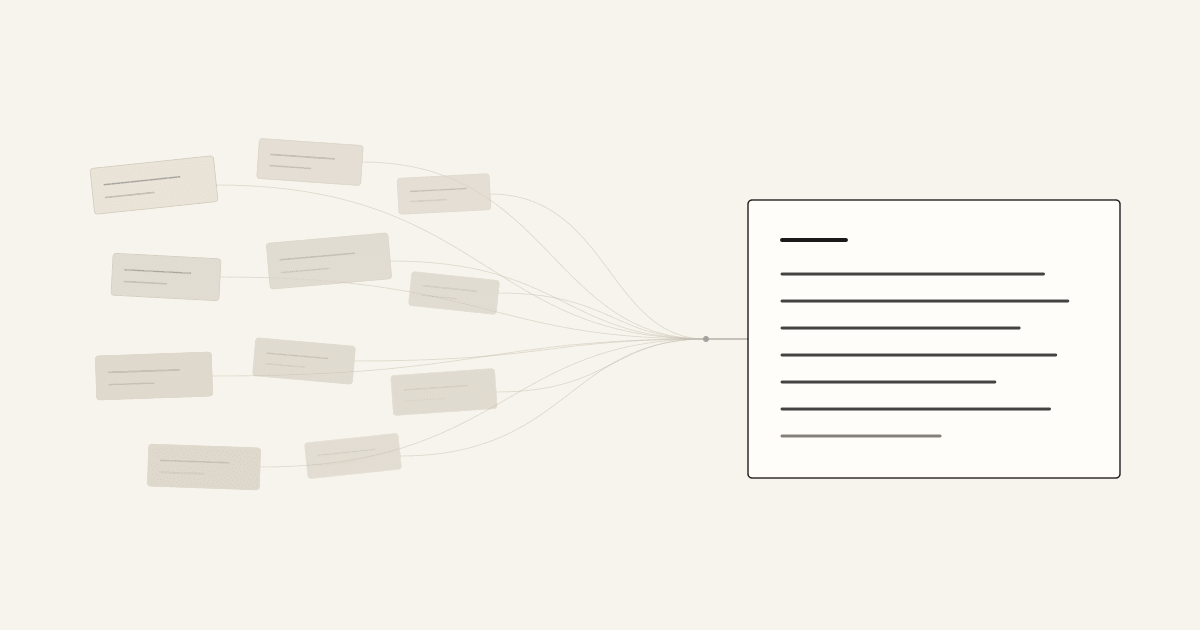
Anyone who has ever tried to work on their personal brand starts in the same place. You search your own name to see what’s already out there.
And it has always been an unsatisfying exercise.
Ten blue links. Your LinkedIn, hopefully near the top. A directory listing from 2016 that you have no memory of creating. Something from your college days. Two or three results belonging to a completely different person with your name who plays semi-pro cricket in Adelaide. Good for him, genuinely, but he’s not helping.
You close the tab knowing nothing. You’ve seen fragments, not a picture. Google was never going to give you the picture, because Google’s job was to hand you a pile of doors and let you decide which ones to open.
Except that’s not what your name search looks like anymore.
Google now runs AI Overviews above the results. Same search, same habit, completely different answer. Whether one fires for your own name depends on how much Google thinks it can safely say about you. So you might get a paragraph. You might get nothing, which tells you plenty on its own. When it does fire, it sits above every link, having already read your sources and decided what they mean. Nobody opted into this. You didn’t switch tools. You didn’t start using a chatbot. You typed your name into Google the way you have for fifteen years. The results page changed underneath you.
Ask ChatGPT or Perplexity directly and you get the same thing, usually longer and with citations.
That paragraph is an audit of your entire online presence, done in thirty seconds, for free. Most people scroll straight past it.
Why this is such a big deal
Because for the first time, you can see what all your scattered stuff adds up to.
Your LinkedIn, your site, your GitHub, that podcast bio, the old company page still floating around. You’ve never seen those things as a single story, because nothing has ever read all of them in one go and reported back. You just knew, vaguely, that they existed.
Here’s what an assistant does when you ask it who you are:
- Gathers whatever sources carry your name.
- Reads all of them together, which nobody, including you, has ever done.
- Finds the places where they disagree. Three job titles across three different years, say.
- Picks the version that shows up most often and writes it up as your story.
Step four is the interesting one. It isn’t picking the newest. It’s picking the most repeated.
So the paragraph that comes back is an accurate report on the state of your online presence. If it reads clearly, your sources are clear. If it’s vague, or describes someone you stopped being in 2022, your sources are vague and out of date. The AI isn’t making a mistake. It’s reading what’s there.
That’s a mirror. A slightly unflattering one, which is exactly what makes it useful.
”But it might not even know who I am”
Quite possibly. And that is also a finding.
This isn’t about being famous enough to have an entry somewhere. If you ask and get a shrug, or a vague answer, or a confident description of the cricket guy, that’s not the AI failing. It’s telling you your sources are too scattered and too disconnected to add up to a person.
Which is the thing you were trying to work out when you searched your own name in the first place.
Here’s what I’m going to do
The goal is simple. Make every source about me clear and current, so the story comes out clean. Nothing here is glamorous.
1. Ask, and actually read the answer. Search my own name and read the Overview properly instead of scrolling past it. Then log out and ask ChatGPT, Claude, Gemini and Perplexity who I am and what I write about. Note what’s wrong, what’s five years old, and what belongs to a different Aditya Singh.
2. Make every bio say the same thing. My LinkedIn, GitHub and X bios were written years apart and it shows. One short bio, same wording, everywhere. Agreement across sources is the whole game.
3. Clean up the old stuff. Dead job titles, guest post bios, directory listings I forgot about. This is usually where the confusion comes from, and most of this job is fixing old pages rather than writing new ones.
4. Fix my own pages. My homepage and CV should answer “who is this and what do they do” in plain sentences near the top. The information is there. It’s also scattered and slightly buried.
5. Do the boring technical bit. My posts carry Person schema for the author but no sameAs, so nothing on my site connects the byline, the GitHub account and the LinkedIn profile into one human. Adding that. My llms.txt lists pages, so it gets a short section on who I am. Then I’ll check whether the AI crawlers visit my homepage at all, because the blog getting crawled says nothing about the page that describes me.
6. Ask again in two months. Same questions. See if the story improved.
So what do I actually think?
That consistency now matters more than freshness, which is the opposite of how we’ve all been taught to do this.
The instinct is always to update. Refresh the site, rewrite the bio, publish something new. But updating one page while six other places keep repeating the old version is like correcting a rumour by whispering. The repeated version wins.
The other shift is in what a personal brand even is now. It used to be your best page. You’d point people at the good profile or the article you were proud of, and that was the version they got.
A summary doesn’t work that way. It averages you. Every stale profile and abandoned bio gets a vote; the weakest source quietly drags the whole paragraph down.
Which leads somewhere slightly odd. Deleting a bad source is now worth roughly as much as publishing a good one. No personal branding advice has ever ended with “go find that 2016 directory listing and kill it,” but that’s where we are.
Have you tried this on your own personal brand?
Go and do it now. Search your name, read the Overview if you get one, then log out and ask the assistants directly. Read what comes back as a report rather than a verdict. Every wrong or missing detail is pointing at a specific source you need to fix.
I’m going to work through that list over the next few weeks and share the updates here. What the models said about me at the start, what I changed, and whether the story got any cleaner. If it doesn’t improve, you’ll get that post instead, which is probably the more interesting one anyway.
Go and find out what the internet says you do for a living. There’s a paragraph sitting at the top of your own name search, whether you’ve read it or not.